
Analysis of scanner truck images thwarts entry of more than 30 kilos of cocaine
The analysis of images obtained through scanner technology allowed the Antofagasta Regional Customs to detect an anomaly in the structure of a truck inspected at the Ollagüe border complex, a procedure that culminated in the seizure of more than 30 kilos of drugs.
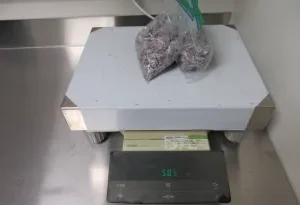
During a routine check at the Ollagüe border crossing, the vehicle was selected for inspection using a truck scanner. The interpretation by the specialized officer revealed images inconsistent with the vehicle’s normal configuration, prompting a thorough physical search. This resulted in the discovery of 29 packages concealed within the cab’s bodywork. Field tests confirmed the packages contained cocaine hydrochloride and cocaine base, with a total weight exceeding 30 kilograms.
The background information was made available to the Public Prosecutor’s Office, which ordered the first steps of the investigation, which were entrusted to the Investigations Police (PDI).
The Regional Director of Customs in Antofagasta, Francisco Romero Papasideris, emphasized that “this procedure is the result of the work of the scanner truck operating at the complex, and the level of expertise of the officers, both in selecting the truck for inspection and in analyzing the images. Non-invasive technology is a fundamental tool, but its effectiveness depends on the experience and technical knowledge of our officers to correctly interpret the images. This combination allowed us to detect an anomaly that was not obvious and to carry out another successful procedure that initiates the investigations ordered by the Public Prosecutor’s Office and conducted by the Investigative Police, all in the fight against organized crime.”
Meanwhile, lawyer Tamara Farren Llantén, from the Antofagasta Regional Prosecutor’s Office, highlighted the coordinated work carried out by the Public Prosecutor’s Office, the National Customs Service and the PDI, which has turned the region into a wall against drug trafficking.
“This new seizure, carried out based on risk profiles and with the use of modern technology, demonstrates once again that the coordination and joint effort of state institutions is capable of thwarting the plans of criminal organizations that attempt to cross our border with drugs or other illegal cargo, thus protecting the health and safety of people,” he said.
The lawyer reported that the detainee, a 49-year-old Bolivian citizen, was formally charged with drug trafficking and was placed in pretrial detention due to the danger to public safety, with a 120-day investigation period.
For his part, the head of the Antofagasta Police Region, Prefect Inspector Freddy Castro Crespo, stated that “the ongoing collaboration between the Public Prosecutor’s Office, the National Customs Service, and the Investigations Police is fundamental to combating organized crime. Thanks to this coordinated effort and the deployment of our specialized detectives, it was possible to establish the existence of the crime, arrest the perpetrator, and seize more than 30 kilos of drugs, reaffirming the institutions’ commitment to protecting our borders and ensuring the safety of our citizens.”
This operation adds to other recent successes at the Ollagüe border crossing. During the first days of June, 458 kilograms of cannabis were discovered hidden in a tanker truck, and subsequently, more than 4 kilograms of cocaine were found concealed in a false bottom of luggage. These results reflect the strengthening of controls through risk analysis, the use of non-invasive technology, and team training.