Fiber Detection and Ranging (FiDAR) – The Cost-Effective Approach to Extended Land Borders
Fiber Detection and Ranging (FiDAR) is becoming an important new tool in modern border security. While FiDAR is still considered an emerging technology, it is already proven in operational deployments. FiDAR systems are currently deployed across six international borders and are being piloted on a further eight border security programs, representing more than 20,000 kilometres of monitored or evaluated border infrastructure worldwide. This growing adoption reflects increasing confidence from border agencies in FiDAR as a reliable and scalable surveillance solution.
One of the most significant examples of this adoption is within the United States. FiDAR technology is currently being deployed by U.S. Customs and Border Protection (CBP) recently warding Sintela a $200 million contract extension for its Linear Ground Detection System (LGDS) programme. The LGDS programme uses fibre-optic sensing systems to provide continuous border surveillance and real-time intelligence across the U.S. border.
The impact of the programme has already received national recognition. The U.S. Border Patrol LGDS Team was awarded the “MVP: Leveraging Technology” award for excellence in implementing the system and improving operational border security capabilities. The award recognised the success of LGDS in enhancing detection capabilities and providing real-time intelligence through continuous fibre-optic monitoring.
FiDAR gives border agencies a practical and cost-effective way to monitor long stretches of remote land borders continuously, day and night and in all weather conditions. Traditional systems such as cameras, radar, and regular patrols are expensive to install and maintain across hundreds of kilometres. They can also be affected by bad weather, darkness, difficult terrain, and blind spots. In many remote regions, patrols only provide temporary coverage, leaving large areas unmonitored for long periods.
FiDAR technology helps solve these problems by providing continuous, covert monitoring with accurate detection and low false alarm rates. The system works by using standard fibre-optic cable similar to the type already used in telecommunications networks. Light pulses are sent through the cable, and the system analyses tiny changes in the returning light caused by vibrations or disturbances near the cable.
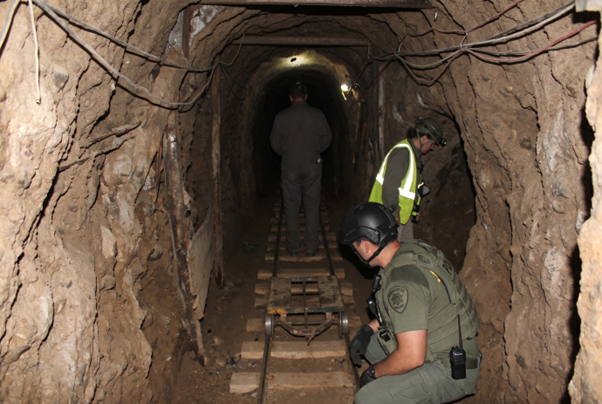
In simple terms, the fibre cable becomes a long line of listening sensors capable of detecting movement and activity along the border. This includes people walking, vehicle movement, fence climbing, fence cutting, digging, and even tunnelling activity underground. Unlike traditional point sensors, FiDAR provides continuous coverage along the entire cable length, helping eliminate surveillance gaps.
A single ONYX™ unit developed by Sintela Limited can monitor up to 100 kilometres of fibre cable simultaneously. The system creates thousands of virtual detection points, allowing security teams to monitor large areas continuously and identify activity with a high level of accuracy. This is especially valuable in remote areas where cameras and patrols cannot provide constant coverage.
Another major advantage is low power consumption. An ONYX unit uses approximately 110 watts of power, making it suitable for remote deployment using solar panels or other off-grid power systems. This reduces infrastructure costs and allows long-term operation in isolated border regions.
The fibre-optic cable can be buried underground or attached directly to border fencing. Buried installations are particularly effective because they are extremely difficult to detect or tamper with. Fibre cable is also lightweight and flexible, allowing it to be deployed across deserts, mountainous terrain, dry riverbeds, remote tracks, and other difficult environments. With the Sintela ONYX system the only infield element the fiber cable and so has virtually zero annual operational maintenance costs compared to traditional surveillance systems which have high lifetime maintenance, repair and replacement costs.
One of the most important strengths of the Sintela ONYX system is the quality of the data it collects. The key to the success of the Sintela ONYX system is that it records an extremely accurate recording of the original noise and vibration signal. It captures the phase, amplitude, and frequency of the signal across very high dynamic ranges. This means the artificial intelligence software works from exceptionally accurate data, leading to more reliable detection and classification of activity.
The system processes information locally rather than sending large amounts of raw data back to command centres. Using onboard processing and artificial intelligence, ONYX can detect, classify, and locate suspicious activity in real time. Only essential information, such as the location, time, and type of activity, is transmitted to operators.
This approach reduces network traffic, speeds up response times, and allows operators to focus quickly on genuine threats. In quiet environments, the system can detect a person walking more than 20 metres away from the buried cable. In more complex environments, artificial intelligence helps separate genuine threats from normal background activity, reducing false alarms.
The real cost-effectiveness of the Sintela ONYX system comes from changing how border patrol resources are used. Traditional border patrol operations spend enormous amounts of time, manpower, fuel, and equipment monitoring areas where no activity is taking place. In many border regions, patrols observe little or no suspicious activity for as much as 97% of operational time.
ONYX changes this model completely. Instead of spreading personnel and vehicles thinly across inactive border regions, the system continuously monitors the entire border and directs resources only to locations where real activity is detected. This allows agencies to concentrate patrols, drones, vehicles, and rapid response teams precisely where they are needed most. By shifting operational focus away from the 97% of border areas showing no activity and toward the small percentage where genuine events are occurring, ONYX acts as a true force multiplier for border security operations.
The system can also integrate with surveillance cameras and other monitoring systems. When activity is detected, ONYX can automatically direct nearby cameras toward the location, giving operators immediate visual confirmation and improving situational awareness.
Overall, FiDAR is becoming a highly effective solution for long-range border surveillance. By combining continuous monitoring, accurate detection, artificial intelligence, and real-time alerts, systems such as ONYX provide border agencies with a practical and efficient tool for improving border security and responding more effectively to illegal crossings and unauthorized activity.