National Security Of Mongolia And Refugees, Migrants, And Internal Migration
By P. Battogtokh, Ulaanbaatar Erdem University, Dean, School of Social Sciences and Humanities, Professor & Ts. Ganbold, Research Institute Researcher, Center for Border Security Studies, PhD
The refugee issue has intensified globally in the twenty-first century and has become a direct factor affecting regional and international stability. In particular, geopolitical tensions in the Euro-Asian region have increased, while internal political and social transformations in neighboring states have contributed to growing migration flows. Migration today is no longer solely a humanitarian issue; it is closely intertwined with questions of sovereignty, security, and sustainable development.
Following the Second World War, refugee crises became especially acute, prompting the establishment of the United Nations High Commissioner for Refugees (UNHCR) in 1950. In 1951, the United Nations adopted the Convention Relating to the Status of Refugees, which today has more than 140 State Parties. Mongolia has not yet acceded to this Convention but participates as an observer in related international processes.
Mongolia is a small, landlocked country located at the crossroads of major civilizations and religious traditions. Throughout its long history, it has survived complex geopolitical environments by adhering to the principle of anticipating threats, preparing for challenges, and enduring hardships. A careful study of Mongolia’s historical experience offers valuable insights into addressing present-day security concerns.
Although global political agendas are often shaped by a limited number of major powers, the decisions taken at that level do not always yield optimal or equitable outcomes. Humanity’s history has been marked by repeated cycles of conflict; it is often said that only a little more than one hundred days in recorded history have passed without warfare somewhere in the world. Yet alongside the history of war exists a parallel and persistent effort to prevent it.
Today’s complex tensions between the North Atlantic Treaty Organization (NATO) and the Russian Federation illustrate the fragility of the international security order. While Mongolia is not directly involved in such confrontations, shifts in the global balance of power and regional instability inevitably affect small states situated between major powers. Lessons from history suggest that sustainable solutions must go beyond political elites and involve broader societal participation, including scholars and experts from diverse fields.
The concept of integrated deterrence—emphasizing the coordination of military, economic, technological, and diplomatic instruments—has emerged as a contemporary approach to security management. However, its implementation will differ depending on each country’s level of development and national characteristics. Coordinating the interests of states at different stages of development at international, continental, and regional levels remains an exceptionally difficult task. For this reason, effective and inclusive cooperation mechanisms are indispensable.
At a time when poverty, hunger, transnational organized crime, environmental degradation, and widening inequality persist across much of the world, political leaders alone have struggled to generate comprehensive solutions. International forums dedicated to border security can therefore serve as important platforms for uniting experts and fostering constructive dialogue.
Refugees, Migrants, and National Security
Due to the internal conditions of neighboring countries such as the People’s Republic of China and Russia, as well as regional conflicts, there remains a certain possibility that third-country refugees could attempt to enter Mongolia. While the current scale is limited, contingency planning is a strategic necessity.
Mongolia’s National Security Concept includes provisions to:
Prevent large-scale inflows of foreign refugees across national borders;
Maintain an appropriate proportion of foreign nationals and stateless persons;
Protect the domestic labor market.
Refugee and migrant flows may generate several potential risks:
Transformation of social structure. Differences in ethnicity, language, religion, and cultural practices may create social tensions if integration mechanisms are insufficient.
Pressure on the labor market. An influx of low-cost labor can intensify competition for employment, potentially increasing unemployment or depressing wages in certain sectors.
Criminal and security risks. Unregulated migration may create vulnerabilities exploitable by transnational criminal networks.
Border security challenges. Concentrations of displaced populations near border areas may create humanitarian and security pressures, particularly if neighboring regions are unstable.
International experience indicates that prolonged refugee concentrations in border areas may pose risks to sovereignty and internal stability if not effectively managed. However, it is also important to recognize that migration can produce positive economic and cultural contributions when governed through clear legal frameworks and integration policies. Skilled migrants, for example, may contribute to economic diversification and innovation.
The Situation in Mongolia
In Mongolia, the number of foreign nationals with official refugee status remains small. Nevertheless, internal migration has become a significant national concern.
Several trends are evident:
- Border regions have extremely low population density;
- Young and working-age citizens increasingly migrate to major urban centers;
- Rural areas face depopulation;
- Excessive concentration has emerged in the capital.
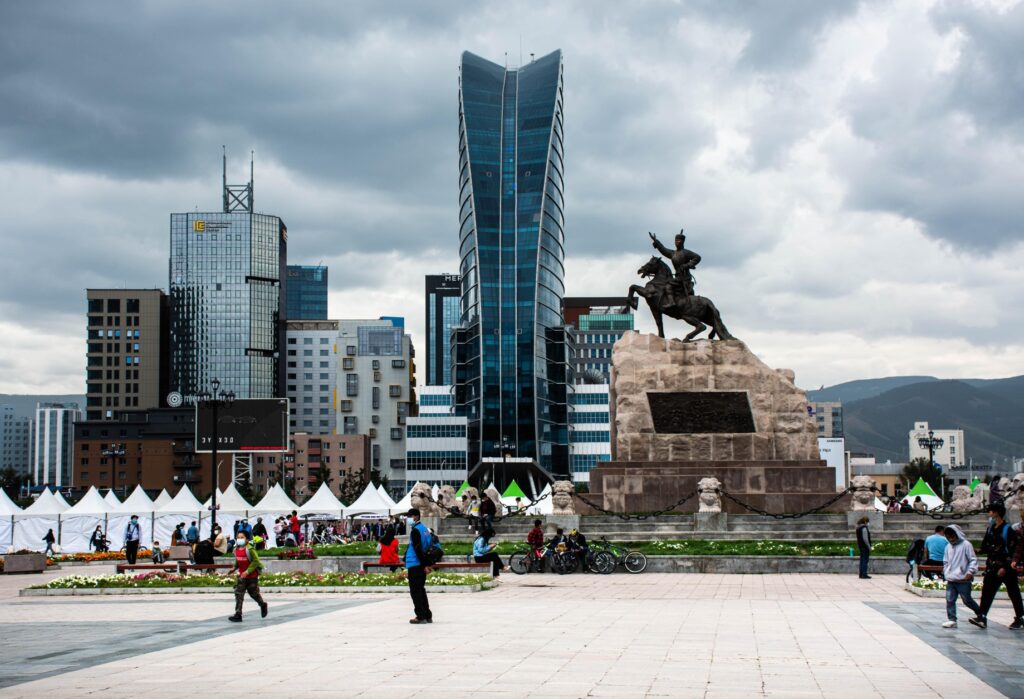
The overconcentration of population in Ulaanbaatar has created substantial pressures on infrastructure, housing, social services, employment, and air quality. Informal settlements have expanded, and urban planning faces structural challenges.
At the same time, some border areas have a population density of less than one person per square kilometer. From a strategic border security perspective, such demographic imbalance raises concerns. Sparse population in frontier regions may limit economic vitality, weaken local resilience, and reduce the state’s capacity for effective territorial management.
Therefore, internal migration is not merely a socio-economic issue but also a matter of long-term national security planning. Balanced regional development is essential to maintaining demographic stability and safeguarding border areas.
International Legal Framework and Mongolia
Under the 1951 Refugee Convention, State Parties undertake obligations including:
Respect for the principle of non-refoulement (prohibition of forced return to persecution);
Equal access to primary education and employment opportunities;
Provision of travel documents to recognized refugees.
If Mongolia were to consider accession to the Convention, several preparatory measures would be necessary:
Improvement and harmonization of national legal frameworks;
Establishment of a clear asylum determination system;
Introduction of unified registration, monitoring, and information systems.
Accession would strengthen Mongolia’s alignment with international humanitarian standards while also requiring careful calibration to national security interests and administrative capacities.
Policy Implications and Recommendations
Mongolia should conduct a strategic-level assessment of potential accession to the 1951 Refugee Convention, weighing humanitarian commitments against national interests.
Development policy should prioritize strengthening border and rural regions, rather than concentrating investment exclusively in the capital.
Economic incentives—such as tax benefits and housing support—should be introduced to encourage sustainable settlement in frontier areas.
Internal migration should be regulated through coherent, balanced policies that promote regional equity.
Registration and monitoring systems for foreign nationals and migrants should be enhanced to ensure transparency and security.
Migration, whether international or internal, is inseparable from national security considerations in the contemporary world. For Mongolia, a country situated between major powers and characterized by vast territory and low population density, demographic balance and border stability are of strategic importance.
At the same time, security must be balanced with humanitarian principles and international cooperation. Historical experience demonstrates that sustainable peace and stability cannot be achieved through isolation or reactive measures alone. Instead, comprehensive policy planning, inclusive dialogue, and effective coordination mechanisms are essential.
By integrating national development strategies with border security planning and carefully evaluating international legal commitments, Mongolia can strengthen its resilience while contributing constructively to regional and global stability.