
The Finnish Border Guard tests safeguarding of subsea cables together with its partners
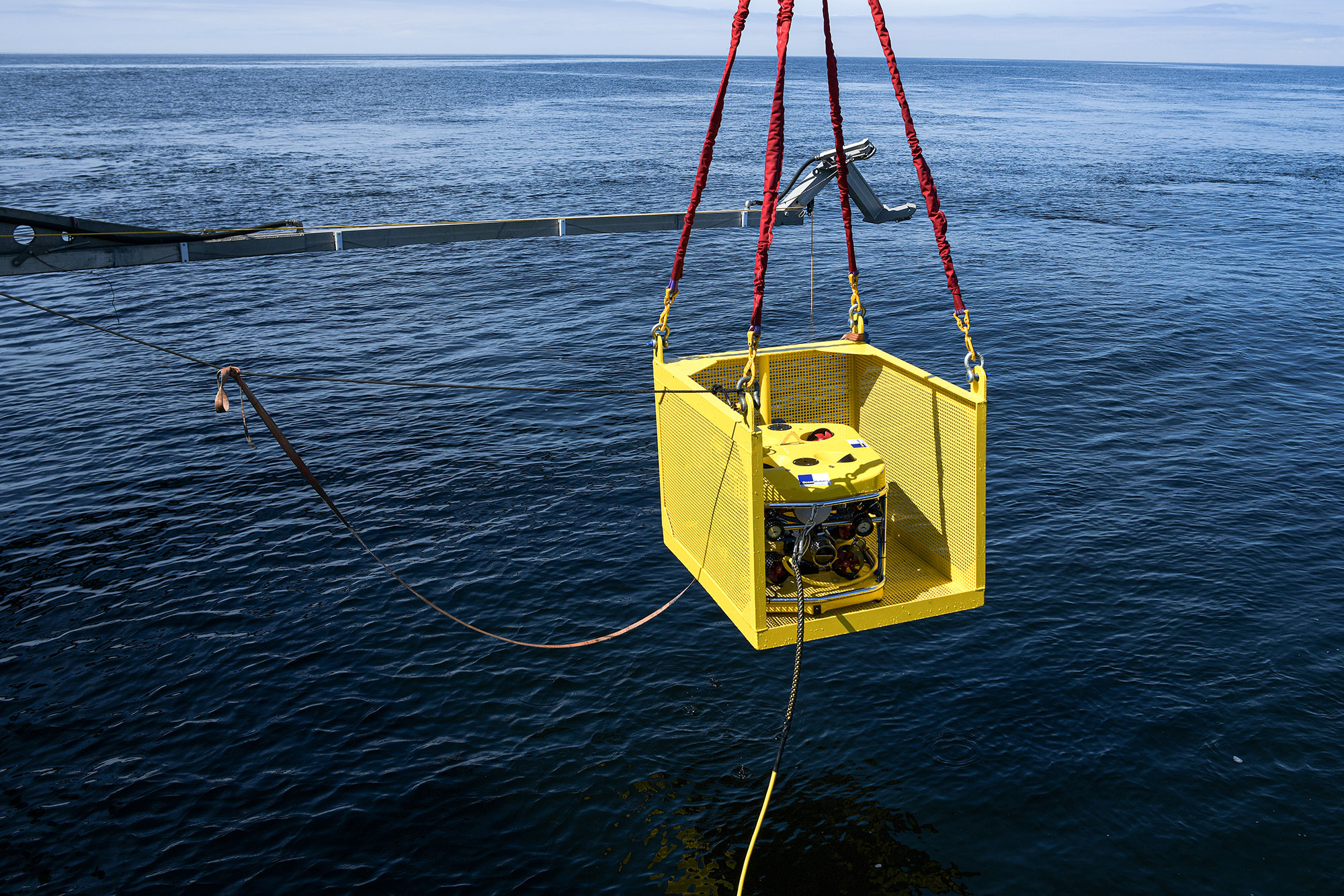
The Border Guard leads the development related to the EU Action Plan on Cable Security safeguard critical maritime infrastructure in the Baltic Sea. The Border Guard has together with the Finnish Navy and several companies tested a new type of observation equipment at sea.
To continue, a system based on distributed acoustic sensing was tested on the seabed. This system enables us to identify a threat or a risk approaching our subsea cables. Proactive or rapid identification may hinder, or at least minimise, damages to subsea cables.
The project is based on distributed acoustic sensing, that is to say, DAS technology, where the fibre-optic cable observes and measures abbreviating vibrations of the seabed. The DAS device analyses changes in the reflections of light on the optic fibre, which enables us to detect, for instance, an approaching vessel that is dragging its anchor.
– The Border Guard leads the work to safeguard critical maritime infrastructure in the Baltic Sea, based on the EU Action Plan on Cable Security. By enabling these tests, we further new measures to protect critical maritime infrastructure of EU coastal states in the Baltic Sea region. ‘It is important that companies who own critical infrastructure participate in the testing, along with the authorities’, Ilja Iljin, Border Guard Headquarters specialist preparing the implementation of the EU Action Plan on Cable Security, states.
After successful field testing, the development of the system continues in cooperation with our partners.
In addition to the Border Guard, also the Naval Academy, Fingrid, Gasgrid, Geological Survey of Finland and Seismological Institute at the University of Helsinki participate in the project, in addition to Elisa Oyj, whose subsea cable has been the test objective. Furthermore, material from the Border Guard and the Finnish Navy was used in the tests.
Protecting our critical maritime infrastructure calls for a new approach, where the authorities and owners of critical infrastructure, as well as scientists, cooperate in order to find new solutions. Ultimately, this work benefits our nationals, as the critical infrastructure, and thus, the operations of our society, can be protected.