The validity of the buffer zone on the Polish-Belarusian border has been extended for another three months
The ban on staying in a specific area in the border zone adjacent to the Polish state border with the Republic of Belarus has been in effect since June 13, 2024, and is extended every 90 days. Its validity is related to the continuing threat of migratory pressure from Belarus.
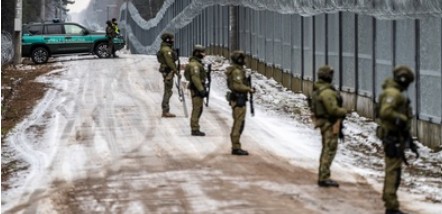
The restricted zone will cover a section of the border over 78 km long, located within the territorial reach of Border Guard posts in Michałów, Narewka, Białowieża, Dubicze Cerkiewne, and Czeremcha. For approximately 59 km, the restricted zone extends 200 meters from the national border. For a section over 15 km, located within nature reserves, the zone is wider, measuring approximately 2 km, and for approximately 4 km, it extends inland by approximately 4 km.
Effective fight against migration pressure
Since the beginning of September, the Border Guard has recorded over 4,600 attempts to illegally cross the border with Belarus. This represents a 5% decrease compared to the same period in 2024. On November 14 and from November 17 to 19, no illegal crossing attempts were recorded at the border.
We are pleased to see a reduction in migration pressure, but we do not yet consider this a lasting process, and therefore we will continue to use all measures that have allowed us to stop illegal migration on this route. In 2023, 12,000 people crossed this border and headed for the western border, in 2024 it was 5,000, and this year it will be around 1,000. This is the scale of the success of the Polish services and the Polish state in stopping illegal migration.
– said Deputy Minister of Internal Affairs and Administration Czesław Mroczek.
Fighting smugglers and efficient border controls
The buffer zone is also a tool designed to combat smugglers. Since September, 40 individuals organizing or aiding smuggling have been detained near the Polish-Belarusian border. In March 2025, the government adopted the National Action Plan against Human Trafficking for 2025-2027. In combating this practice, we emphasize coordinated action and international cooperation. An initiative to harmonize anti-trafficking regulations at the national level is also underway.
Over the past two years, the government has allocated nearly PLN 3 billion to strengthen security along the Polish-Belarusian border. We have expanded the 190-kilometer physical barrier and installed an electronic barrier along sections of the Bug, Svisloch, and Istoczanka rivers, totaling nearly 220 kilometers. Thanks to these measures, border integrity has increased to 98 percent.


