US CBP AMO aircraft assists Turks and Caicos authorities rescue 240 migrants from overcrowded vessel
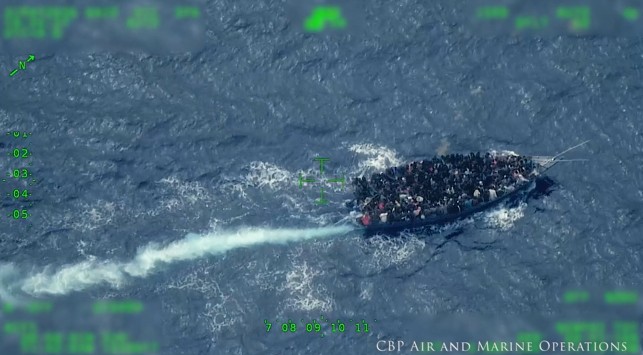
Air and Marine Operations, an operational component of U.S. Customs and Border Protection, detected a vessel Sunday with 240 migrants that authorities in the Turks and Caicos Islands rescued after its engines lost power and began taking on water.
At 2:45 p.m. on May 31, a Jacksonville Air and Marine Branch Multi-Role Enforcement Aircraft detected a vessel about 65 nautical miles south of Turks and Caicos. The vessel, a 50-foot Haitian wooden boat equipped with two outboard engines, was heading north toward the islands.
The AMO aircrew relayed information to Turks and Caicos authorities and Operation Bahamas, Turks and Caicos partners, who continued to provide updates on the vessel’s position, course, and speed. The aircraft later handed off monitoring duties to a U.S. Coast Guard aircraft, which reported the vessel had lost one engine and was slowly taking on water. Occupants were seen bailing three to five gallons of water per minute, authorities said.
“Our crews are trained to respond quickly and effectively to situations like this, where lives are at risk,” said Director of Air and Marine Operations in Jacksonville Drew Gellerson. “Working closely with our partners, we were able to track the vessel and provide critical information to ensure a safe rescue. This incident highlights the importance of international cooperation in protecting lives at sea.”
At 9:08 p.m., the U.S. Coast Guard reported the vessel was dead in the water and that passengers continued to bail water using buckets. Turks and Caicos authorities declared a search and rescue case due to the risk of capsizing and launched four maritime surface assets from Providenciales and Grand Turk.
At approximately 1 a.m. Monday, authorities successfully rescued and interdicted the vessel. Officials reported a total of 240 migrants onboard, including 191 adult males, 44 adult females, and five minors. The passengers and crew were taken by Turks and Caicos authorities and did not reach U.S. soil.