A large-scale cocaine hydrochloride extraction and processing laboratory has been dismantled in an industrial building in the province of Toledo
The Spanish Civil Guard, together with the National Police and the Customs Surveillance Service, have arrested 13 people who formed an international criminal organization dedicated to trafficking cocaine from South America to Europe. A large-scale cocaine hydrochloride extraction and processing laboratory was dismantled in an industrial warehouse in the town of Gerindote (Toledo). Four more searches were carried out in different locations in the Community of Madrid, resulting in the seizure of €100,000 in cash, five firearms, and bulletproof vests, among other items. Operations also took place in Málaga, La Rioja, and Bizkaia in Spain, and in Cartagena, Colombia.
The investigation into this operation, codenamed “Sircan,” dates back to 2022, when the Spanish Civil Guard discovered the possible trafficking of cocaine from South America to Europe by concealing it in shipping containers destined for Rotterdam, Netherlands. From there, it was distributed to Spain and various other European locations.
Joint police operations uncovered a large clandestine cocaine laboratory in a town in Toledo. It was located in an industrial park, integrated with other businesses and industries, giving it a completely legitimate appearance. However, inside the building, various rooms had been specifically equipped for the extraction and processing of cocaine hydrochloride. The laboratory was operated by expert Colombian “cooks” brought in specifically by the organization to process the narcotic.
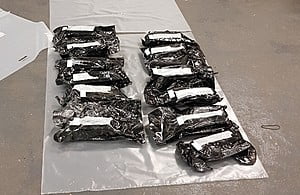
The main area of the laboratory was organized into several distinct zones: extraction, precipitation and filtration, and finally, pressing and packaging. In each of these zones, continuous activity took place, in shifts 24 hours a day, focused on processing cocaine base and its subsequent transformation into cocaine hydrochloride, which was presented in the form of “bricks” and sealed with the various logos used by the organization to differentiate its product in the illicit market.
At the time of the raid, the laboratory was in full production, containing substances at various stages of processing, from liquid mixtures of cocaine base with solvents to finished cocaine hydrochloride. Between 7 and 8 tons of corn flour, used for concealment and transport and impregnated with cocaine base, were seized. Nine kilos of processed and packaged cocaine, ready for sale, with a purity of approximately 93%, were also found.
During the dismantling of the infrastructure, 3,500 kilos of various precursors, both solid and liquid, used in the different phases of drug extraction and processing, were seized. The laboratory was equipped with all the necessary tools and materials, constituting a stable and continuous source of narcotic production for the organization.
In addition to cocaine hydrochloride, various smaller quantities of other substances were seized, including pink cocaine, MDMA, poppers, marijuana, 90 tablets for erectile dysfunction, and bags of Paprika exactly the same as those contained in the container seized in the port of Cartagena (Colombia), with almost a ton of cocaine.
Interventions in Colombia and in five Spanish provinces
The operation unfolded in three main phases. The first, carried out in Cartagena, Colombia, in April 2025, resulted in the seizure of nearly one ton of cocaine hydrochloride.
The second and main phase of the operation took place in February of this year in Spain. During this phase, the laboratory in Gerindote (Toledo) was dismantled, and four more searches were carried out in different locations in the Community of Madrid. Seven people were arrested during this operation, including the leader of the criminal organization. Authorities seized approximately €100,000 in cash, five firearms, hundreds of rounds of ammunition of various calibers, three bulletproof vests, two stun guns, a money counting machine, mobile phones, relevant documents, a large quantity of narcotics, and three high-end vehicles.
The final phase took place in March, with raids in the provinces of Málaga, La Rioja, and Bizkaia, where approximately €70,000 in cash, proceeds from drug trafficking, and luxury watches, among other items, were seized. The operation culminated in the remaining arrests, bringing the total number of members of the criminal organization detained to 13.
Money laundering investigation
At the same time, the Toledo Operational Unit of Customs Surveillance has carried out the study of the patrimonial and economic relationships between the investigated, which have resulted in the adoption of precautionary measures against seven properties, 17 vehicles and eleven bank accounts.
The investigation was carried out by the Judicial Police of the Civil Guard in Toledo, in conjunction with the Madrid Police Headquarters and the Customs Surveillance Service. In Colombia, the country’s Anti-Narcotics Police conducted the inspection and seizure at the port of origin.
During the development of the operation, international police cooperation between various countries in North and South America (USA, Colombia, Peru and Uruguay), as well as in Europe (France, the Netherlands and Portugal), has been of great importance, with operational activity even being carried out in Colombia, Peru and Portugal, which has been crucial for the important result achieved.