Biometric Technologies for Border Control
Biometric technologies are reshaping border control in ways that go far beyond the visible checkpoint. What is unfolding is a deeper transformation in how identity is established, trusted, and managed across the travel lifecycle. The familiar moment of presenting a passport—and increasingly stepping through an automated gate—is only the surface expression of systems built on advanced biometrics, data fusion, and real-time analytics. The real innovation lies in how these technologies operate behind the scenes, connecting identity, risk, and movement into a continuous digital process.
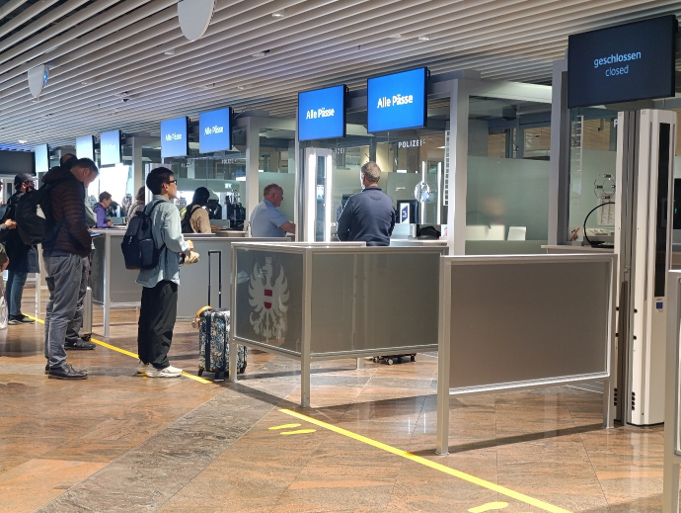
At its core, biometrics shifts border control from document validation to identity assurance. Instead of relying on passports as the primary proof of identity, authorities now depend on unique physical traits—most commonly facial features but also fingerprints and iris patterns—to confirm who a traveller is. This approach provides a far higher level of certainty, particularly when linked to government databases and international watchlists. The process itself has become highly sophisticated, combining multiple sensors and verification steps: cameras capture facial images, document readers validate passports, and liveness detection prevents spoofing attempts using photos or masks.
Within this architecture, facial recognition has emerged as the dominant modality. Its ability to operate passively and at a distance makes it ideal for high-throughput environments such as airports, where speed and user experience are critical. Yet fingerprint biometrics remain indispensable, particularly in enrollment, visa processing, and secondary inspection. The coexistence of modalities reflects a broader trend toward multimodal systems, where different biometric traits complement each other depending on context and risk level.
The companies shaping this landscape reflect different layers of the technology stack. Large integrators such as IDEMIA, Thales and, increasingly, Amadeus build comprehensive systems that combine biometric capture, verification algorithms, and identity management platforms. Their value lies in orchestrating complex national or international infrastructures where data flows securely between agencies, airports, and airlines.
Amadeus’ evolution into this space is particularly illustrative of how biometrics is merging with the wider travel ecosystem. Its platforms connect passenger data, biometric identity, and operational workflows across the journey, allowing border control to become part of a continuous, interoperable system rather than a standalone process. Its development of biometric corridors capable of identifying passengers “on the move” signals a future in which identity checks are embedded seamlessly into the environment rather than concentrated at fixed checkpoints.
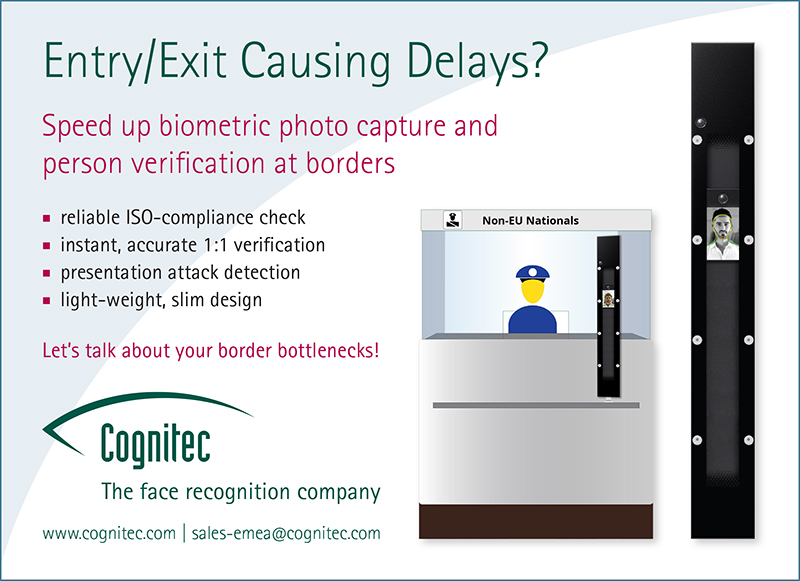
Alongside these integrators, specialist providers play a crucial role in advancing the underlying technologies. Cognitec, for example, focuses almost exclusively on facial recognition, supplying algorithms used in border control systems worldwide for identity verification and watchlist matching. Its long-standing focus has allowed it to refine biometric performance under real-world conditions, from variable lighting to high passenger volumes, making it a key component supplier within many larger systems.
US-based Integrated Biometrics highlights a different but equally important segment of the market: fingerprint technology. The company designs lightweight, FBI-certified fingerprint scanners used globally in border control, law enforcement, and identity programs. Its patented light-emitting sensor technology enables devices that are portable, durable, and capable of capturing high-quality fingerprints even in challenging conditions such as dirt, moisture, or extreme temperatures. These characteristics make them particularly valuable at land borders, in mobile units, or in emerging markets where infrastructure may be limited. Integrated Biometrics’ solutions are often embedded within larger systems, demonstrating how fingerprint capture remains a foundational layer even as facial recognition dominates the user interface.
In Europe, secunet represents a different model again—one rooted in cybersecurity and regulatory compliance. The German company delivers holistic border control systems that integrate biometric capture, document authentication, and backend processing within a secure IT framework. Its technologies are widely deployed across European airports, where they must align with stringent requirements such as the EU Entry/Exit System (EES). secunet’s emphasis on presentation attack detection and morphing attack detection illustrates the growing importance of defending against increasingly sophisticated identity fraud techniques.
If companies like secunet focus on secure infrastructure, firms such as Veridos extend the biometric system further upstream into identity issuance. By combining experience in passport production with biometric enrollment and verification technologies, Veridos operates across the entire identity lifecycle—from the creation of secure documents to their use at the border. This vertical integration is particularly relevant for national identity programmes, where consistency and trust must be maintained across multiple stages.
At the same time, a newer generation of companies is redefining where border control begins.
Travizory is a prominent example, focusing on pre-travel risk assessment and digital identity orchestration. Its systems integrate biometric data with passenger information, travel history, and visa records to create a comprehensive traveller profile before arrival. This allows authorities to assess risk in advance, accelerating processing for low-risk individuals while concentrating resources on higher-risk cases. Its FaceLane concept—where passengers are identified and cleared while walking—demonstrates how biometrics and analytics can combine to eliminate the need for traditional checkpoints altogether.
A similar philosophy underpins the approach of Ground Controls, a French-based company focusing on data-driven border intelligence. Rather than concentrating solely on biometric verification, it builds “360-degree” traveller profiles by combining biometric inputs with behavioural and travel data, providing real-time analysis and predictive threat detection. This emphasis on analytics reflects a broader shift toward using biometrics not just to confirm identity, but to support decision-making and risk management at a systemic level.
Across all these players, the unifying theme is convergence. Biometrics is no longer a standalone capability but part of an integrated architecture that includes data platforms, AI-driven analytics, and digital identity frameworks. Artificial intelligence is enhancing every stage of the process, from improving facial recognition accuracy to detecting anomalies and predicting risk. At the same time, digital identity initiatives are enabling travellers to pre-enroll and store credentials electronically, reducing reliance on physical documents and enabling more seamless movement through borders.
The implementation of large-scale systems such as the European Entry/Exit System illustrates how these technologies are being institutionalised. By capturing both facial images and fingerprints for millions of travellers and storing them in a centralised database, EES represents a shift toward persistent, data-driven border management. This kind of infrastructure creates new opportunities for automation and efficiency, but also raises important questions about data protection, sovereignty, and interoperability.
Looking ahead, the trajectory is clear. Border control is moving toward a model in which identity is established once, verified continuously, and shared securely across systems. The physical checkpoint will not disappear, but it will become less central as biometric and digital identity technologies extend both upstream—into pre-travel authorisation—and downstream into the broader travel journey.
In this evolving ecosystem, different companies contribute different capabilities. Integrated Biometrics ensures that high-quality fingerprint data can be captured reliably in any environment. Cognitec and similar firms provide the algorithms that make facial recognition accurate and scalable. Secunet and Veridos deliver secure, compliant infrastructures for national deployments. Amadeus connects these elements into a seamless travel platform, while Travizory and Ground Controls push the boundaries of predictive, data-driven border management.
Taken together, they illustrate that the future of border control is not defined by any single technology, but by the integration of many. Biometrics provides the foundation, but it is the combination of identity, data, and intelligence that ultimately transforms how borders are managed—and how they are experienced by those who cross them.