Europe’s Eastern Frontier Faces a New Era of Border Security Challenges
The European Union’s eastern border has become one of the most strategically important frontiers in the world. Running from Finland in the north through the Baltic States and Poland before stretching southwards towards Romania and the Black Sea, it is no longer simply a line separating neighbouring states. Instead, it has become a complex security environment where geopolitical tensions, migration pressures, organised crime and emerging technologies increasingly converge. Issues that were once considered separate are now closely interconnected, placing growing demands on border agencies and governments alike.
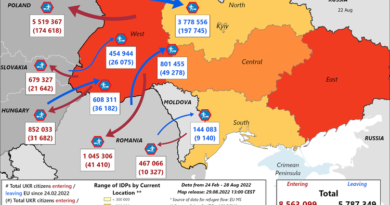
The transformation of the eastern frontier has been driven largely by Russia’s invasion of Ukraine in 2022, which fundamentally altered the security environment across Eastern Europe. Countries such as Poland, Slovakia, Hungary and Romania suddenly found themselves on the frontline of Europe’s response to the conflict, managing the movement of millions of Ukrainian refugees while maintaining the integrity of the European Union’s external borders. The scale of these movements tested border infrastructure, personnel and processing systems in ways few could have anticipated.
While the refugee response demonstrated the resilience and professionalism of European border agencies, it also highlighted the broader security implications of instability on the EU’s eastern doorstep. Frontex has repeatedly warned that continued geopolitical volatility east of the European Union could generate further migration pressures and create new operational challenges for border services. As the agency noted in its Risk Analysis, European Integrated Border Management is being forced to operate in an increasingly turbulent and hostile geopolitical environment.
The war has also reinforced concerns about wider regional instability. European law enforcement agencies remain alert to the opportunities that conflict can create for organised criminal groups, particularly those involved in smuggling, trafficking and other forms of cross-border criminality. Europol’s latest Serious and Organised Crime Threat Assessment identifies organised crime as one of the most significant threats facing the European Union, warning that criminal networks are becoming increasingly adaptable, technologically enabled and international in their operations.
Alongside the consequences of the war in Ukraine, Europe’s eastern borders have become a focal point for a different type of threat: hybrid activity.
Over the past several years, Poland, Lithuania and Latvia have experienced sustained migration pressure on their borders with Belarus. The European Commission has described these activities as the weaponisation of migration, arguing that Russia and Belarus are exploiting vulnerable people as part of a broader campaign designed to place pressure on the European Union. According to the Commission, the tactic forms part of a wider hybrid threat environment targeting the EU’s external borders and broader security interests.
European Commission President Ursula von der Leyen has described the situation as an example of “Russia’s and Belarus’s unacceptable weaponisation of migration”, warning that frontline states are facing increasing pressure to guarantee both national security and the integrity of the Schengen Area. The Commission has subsequently announced additional funding for surveillance systems, communications infrastructure, mobile detection equipment and counter-drone capabilities along affected sections of the eastern frontier.
For border agencies, these incidents create particularly difficult operational challenges. Officers are required to prevent illegal crossings, maintain border integrity and protect national security while simultaneously operating within legal and humanitarian obligations. Unlike conventional migration flows, these situations often have wider political and strategic implications, requiring close coordination between border authorities, law enforcement agencies and national governments.
Migration itself continues to remain a major operational challenge along the eastern frontier. While the Mediterranean routes often dominate headlines, migration pressure can rapidly shift in response to geopolitical events, economic conditions and enforcement measures. Frontex assessments have repeatedly highlighted how global instability, food insecurity and economic hardship can contribute to migration movements towards Europe, often creating opportunities for criminal smuggling organisations to exploit vulnerable populations.
These movements are frequently facilitated by sophisticated smuggling networks. According to Frontex, the number of detected people smugglers increased significantly as irregular migration pressures rose across the EU’s external borders. The agency has warned that migrant smuggling continues to evolve into an increasingly sophisticated criminal business model, closely linked to wider organised criminal activity. Many networks now operate across multiple jurisdictions, adapting routes and methods in response to evolving enforcement measures.
Organised crime remains one of the most persistent concerns facing border authorities across Eastern Europe. The region’s geographic position between Europe, Asia and the Middle East makes it a natural transit corridor for a wide range of illicit activities. Criminal groups are involved in narcotics trafficking, human trafficking, illicit tobacco movements, counterfeit goods and financial crimes, often using the same logistics networks that facilitate legitimate trade.
Europol’s latest assessments highlight the increasingly international nature of organised crime. Networks operate across borders, adapt rapidly to enforcement activity and use modern communications technologies to coordinate operations. The agency has also warned that organised crime is becoming increasingly intertwined with broader security threats, further complicating the task facing law enforcement and border authorities. For border agencies, this means that traditional interception and inspection activities must be complemented by intelligence-led operations, international cooperation and information sharing.
While much of the discussion surrounding the EU’s eastern frontier focuses on the land borders with Russia and Belarus, the Black Sea has emerged as an increasingly important border security environment in its own right. Romania’s coastline represents the European Union’s principal Black Sea maritime border, while neighbouring Bulgaria occupies a key position along one of the region’s busiest maritime corridors. Since the outbreak of the war in Ukraine, the strategic importance of the Black Sea has increased significantly as commercial shipping routes, energy infrastructure and regional security concerns have become ever more closely linked.
For maritime border authorities, the challenge is far broader than managing vessel movements. The region lies at the crossroads of Europe, the Caucasus and the wider Black Sea basin, creating opportunities for smuggling and organised criminal activity alongside legitimate commercial trade. As shipping patterns have adapted to the realities of the conflict, authorities have faced growing demands for vessel monitoring, maritime surveillance and cross-border intelligence sharing. Ports on the western Black Sea have meanwhile become increasingly important for Ukrainian exports, adding a further layer of complexity to maritime security operations and requiring enhanced cooperation between border guards, coast guards, customs authorities and naval forces.
The protection of critical maritime infrastructure has become another growing concern. Ports, energy facilities, offshore installations and logistics hubs all form part of a broader security picture that extends well beyond traditional border management. In response, coastal states have expanded investments in maritime domain awareness capabilities, combining radar systems, electro-optical sensors, aerial surveillance assets and unmanned systems to improve coverage across large maritime areas. For border agencies operating in the region, the Black Sea is no longer simply a maritime border. It has become an extension of the wider eastern frontier security environment where border management, organised crime, regional instability and strategic security considerations increasingly converge.
Technology is increasingly central to how these challenges are addressed.
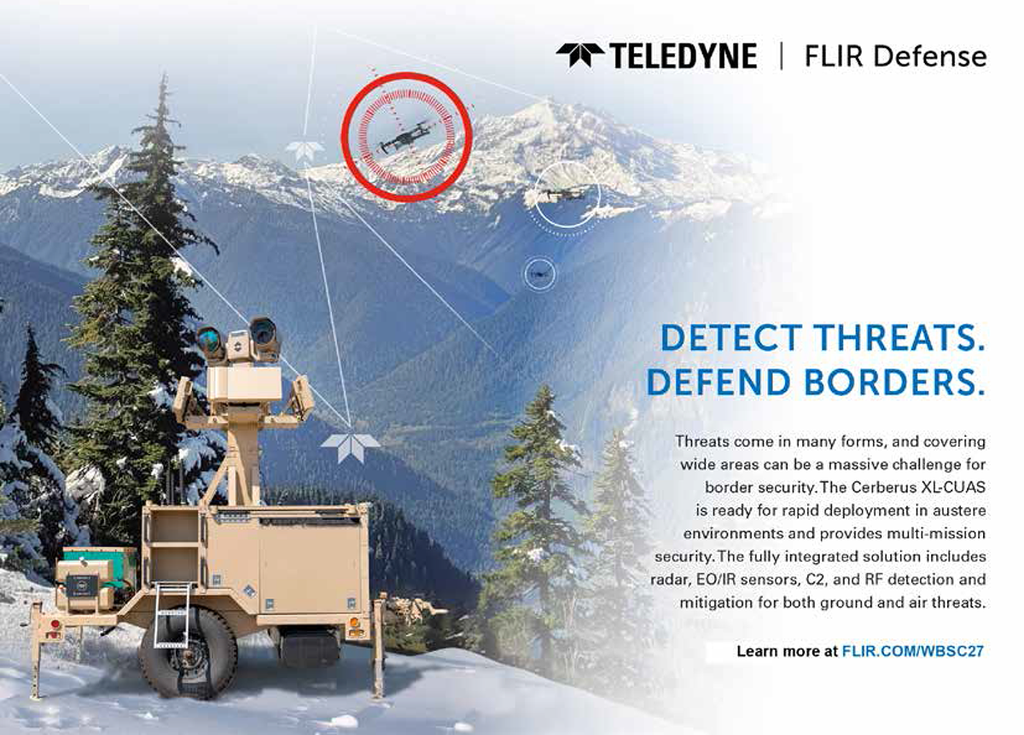
The sheer geography of the eastern border presents difficulties that cannot be solved through manpower alone. Large stretches of forest, wetlands, lakes and remote rural areas make continuous physical monitoring difficult. In response, governments have invested heavily in surveillance technologies designed to improve situational awareness and provide earlier warning of potential incidents. The European Commission’s support package for borders with Russia and Belarus includes substantial investment in upgraded electronic surveillance systems, enhanced telecommunications networks and mobile detection technologies.
Modern border surveillance systems increasingly combine radar, thermal imaging cameras, electro-optical sensors and automated monitoring tools. These capabilities allow border authorities to observe larger areas, identify suspicious activity more quickly and direct resources more efficiently. Across Europe, agencies are increasingly investing in integrated surveillance architectures designed to provide real-time operational awareness across both land and maritime environments.
There is also growing interest in mobile surveillance systems capable of being deployed rapidly in response to changing operational demands. Industry experts argue that mobile and autonomous surveillance platforms can provide flexibility that traditional fixed infrastructure cannot, particularly across remote and difficult terrain where conventional patrol coverage may be limited.
Unmanned systems are playing an increasingly important role. Drones equipped with thermal imaging cameras and advanced sensors are now routinely used to monitor remote terrain, assist patrol units and provide rapid situational awareness. These systems can cover large areas more efficiently than traditional patrols and are becoming an increasingly important part of the modern border security toolkit.
At the same time, unmanned aerial systems present their own challenges. Recognising the growing threat posed by drone incursions, the European Commission has specifically allocated funding to help frontline states improve their ability to detect and counter unauthorised drone activity along the eastern border.
Physical security infrastructure also continues to play an important role. Frontex has noted the substantial expansion of border fencing and physical barriers across Europe’s external borders over the past decade. While such measures remain politically debated, many border agencies regard them as one component of a broader border management strategy. Physical barriers can slow unauthorised movements, channel crossings towards designated control points and provide valuable response time for security forces.
Yet technology and infrastructure alone cannot solve the challenges facing Europe’s eastern border. Personnel remain the most important element of effective border management. Across Europe, agencies are investing in training, specialist capabilities and technological skills to meet increasingly complex operational requirements. Modern border guards are expected to understand advanced surveillance systems, identify sophisticated fraudulent documents, support intelligence-led operations and respond to a wide range of security incidents.
The eastern frontier is likely to remain one of Europe’s most demanding border security environments for the foreseeable future. The war in Ukraine shows no sign of bringing immediate stability to the region, while tensions between Russia, Belarus and the European Union continue to shape the threat landscape. Organised crime networks remain highly adaptable, migration pressures continue to fluctuate, and emerging technologies are creating both new opportunities and new operational challenges.
For Europe’s border security community, the challenge is clear. The eastern border is no longer simply a line on a map. It is a dynamic operational environment where geopolitical competition, criminal activity and migration pressures converge. Securing it will require continued investment in technology, intelligence, infrastructure and personnel, as well as close cooperation between national authorities, Frontex and international partners.
What is certain is that the importance of the European Union’s eastern frontier will continue to grow, making it one of the defining border security challenges of the decade.
Sources: Frontex Risk Analysis 2023/24; European Commission Communication on Countering Hybrid Threats and the Weaponisation of Migration (2024); Europol EU Serious and Organised Crime Threat Assessment (EU-SOCTA) 2025; European Parliament Research Service briefing on eastern EU border regions (2025).
By: Tony Kingham, Editor, Border Security Report