Firm stand against migrant smuggling: global alliance convened in Brussels
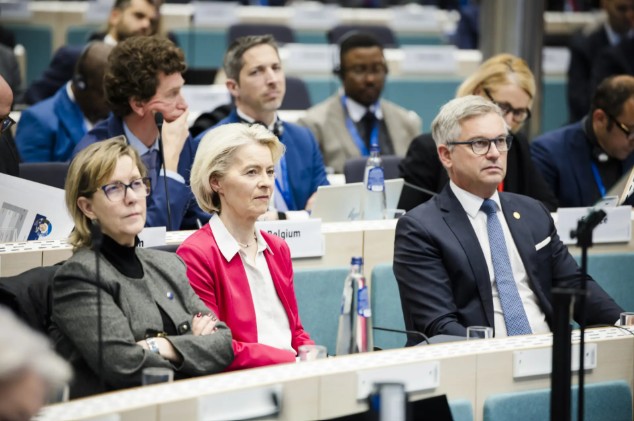
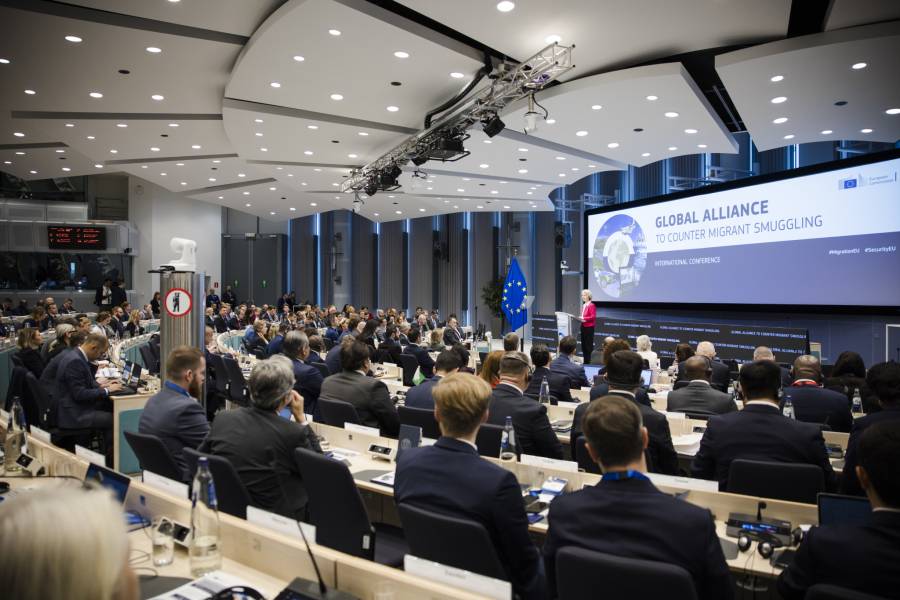
Europol participated in the second International Conference of the Global Alliance to Counter Migrant Smuggling, hosted by the European Commission. Over 80 delegations, including EU Member States, EU agencies, third party countries, international organisations, and private parties attended the event. During this high-level conference, over 50 delegations endorsed a joint declaration, pledging to strengthen cooperation along migrant smuggling routes and tackle the growing digital dimension of these criminal activities. The declaration underscores new preventive measures, including a crackdown on online advertisements promoting migrant smuggling and the disruption of underground banking systems fuelling the criminal business.
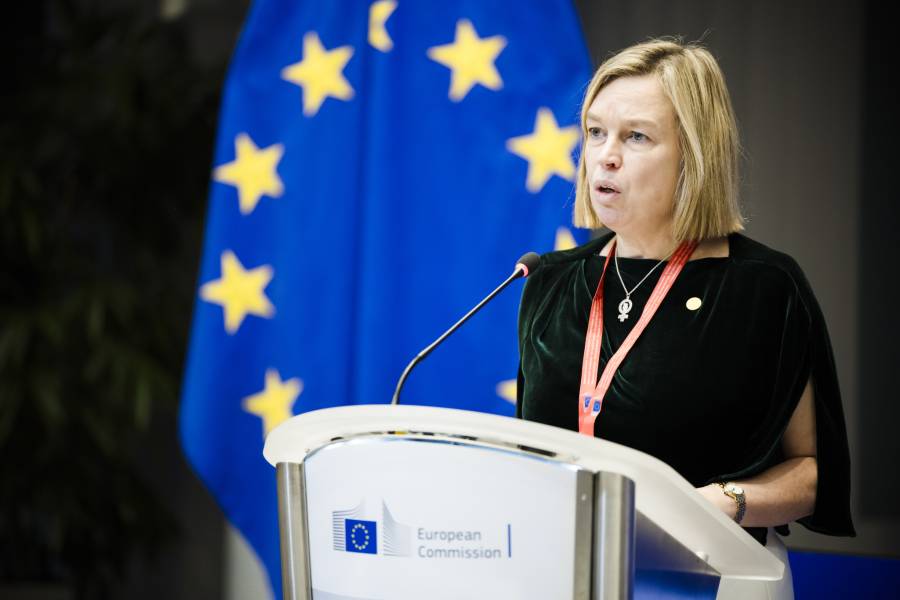
 The European Commissioner for Internal Affairs and Migration, Magnus Brunner, said at the conference:
Magnus Brunner
European Commissioner for Internal Affairs and Migration
Combating migrant smuggling is a global challenge that must also be addressed globally. It is in the interest of all countries affected by the consequences of this criminal business to work together. We welcome the strong willingness of the participating partners to act jointly and in a coordinated manner against these criminal structures. With this conference, we are sending a strong signal: we are cracking down on smugglers, further reducing illegal migration, and creating legal pathways for mobility. For us in the EU, one thing is clear: if we want to put an end to smuggling, we must cooperate at the global level.
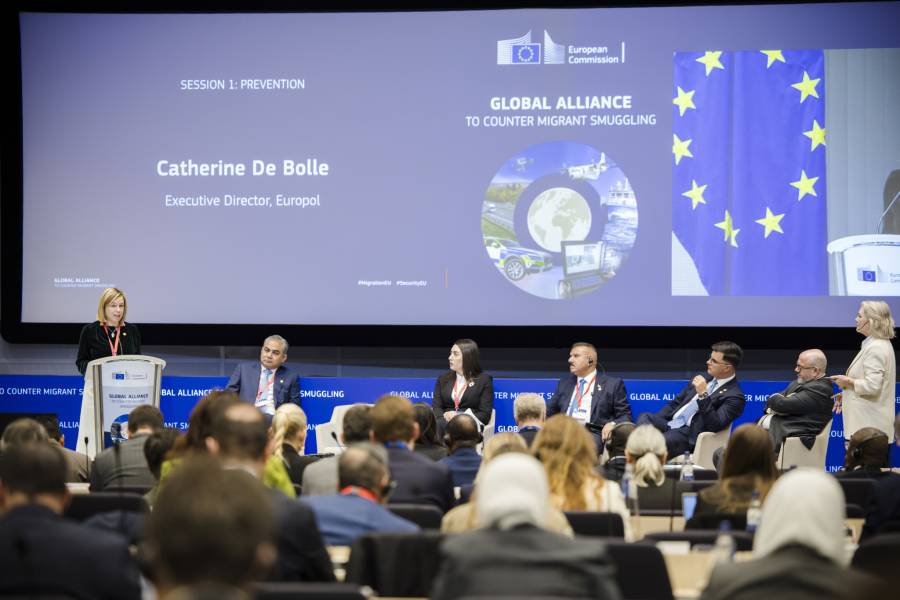
Europol’s Executive Director, Catherine De Bolle co-chaired the first panel focusing on countering migrant smuggling in the digital domain. She welcomed the upcoming establishment, in early 2026, of the European Centre Against Migrant Smuggling (ECAMS) at Europol to reinforce the Agency’s capabilities in this area stressing that Europol is already investing in advanced analytics and cyber-investigative capabilities.
In her remarks, Executive Director De Bolle highlighted:
Catherine De Bolle
Europol Executive Director
Europol’s role is to target the criminals who exploit migration and the digital transformation of migrant smuggling is a test of our ability to adapt. With shared intelligence, common operational actions, strong partnerships and the right tech tools Europol, together with EU Member States and international partners, can dismantle the networks, disrupt their business model, and protect the vulnerable people they put at risk for making a financial profit.
Tackling migrant smuggling content online
The criminal market for migrant smuggling continues to expand, with smugglers rapidly adapting their methods to exploit the digital environment. By operating across social media platforms, using encrypted communication tools and cryptocurrency, criminal networks rely on readily accessible online services to organise their activities and conceal illicit profits. Digitalisation strengthens every stage of the crime, enabling smugglers to act with greater speed, efficiency, and resilience while staying beyond the reach of law enforcement and judicial authorities. Addressing this shift has become essential: in April 2024, Europol hosted the first thematic meeting on tackling migrant smuggling in the digital domain, which paved the way for establishing a dedicated platform to support online investigations.
DigiNex – common actions to counter migrant smuggling activities enabled by the digital environment
Coordinated by Europol’s European Migrant Smuggling Centre and Europol’s EU Internet Referral Unit since its launch in January 2025, DigiNeX drives joint law-enforcement efforts to detect, analyse, investigate or remove online content linked to migrant smuggling.
To strengthen operational support, Europol hosted the first DigiNex Common Action Days (CADs) from 27–29 October 2025. The event focused on identifying suspects’ online footprints, mapping criminal relationships, and pinpointing key locations. Activities included proactive monitoring of smuggling networks and strengthening DigiNex’s OSINT capabilities, fostering closer cooperation between OSINT specialists and investigators. The CADs was supported by the European Commission – DG HOME through funding under the Global Alliance to Counter Migrant Smuggling.
Outcome of DigiNex October 2025 CAD:
- 36 experts from 24 EU Member States and 2 operational partners participated.
- 1 060 identifiers were jointly collected out of which 610 social media URLs, 243 usernames, means of communication, 11 emails, license plates and financial accounts.
- 160 social media accounts linked to migrant smuggling activities were assessed, deconflicted and referred to concerned platforms for take down from the internet.
- 4 additional intelligence reports related to migrant smuggling were shared with participants.
Global Alliance – three pillars to counter migrant smuggling
The Global Alliance sets out a coordinated, three-pillar framework to counter migrant smuggling and protect vulnerable individuals:
- Prevent migrant smuggling by strengthening national frameworks, exchanging information, and raising awareness on the risks of irregular migration, by working with digital platforms to curb smugglers’ increased use of digital tools; and by preventing the misuse of commercial transport to facilitate migrant smuggling by air.
- Respond more effectively by reinforcing operational cooperation along migratory routes and giving a stronger role to Europol and the European Centre Against Migrant Smuggling by stepping up financial investigations to trace, seize and confiscate smuggling proceeds.
- Develop alternatives to irregular migration, both in the countries of origin and of destination. By promoting safe and regular mobility pathways through tools like the EU’s new Talent Pool and addressing the root causes of migration in countries of origin and transit.