
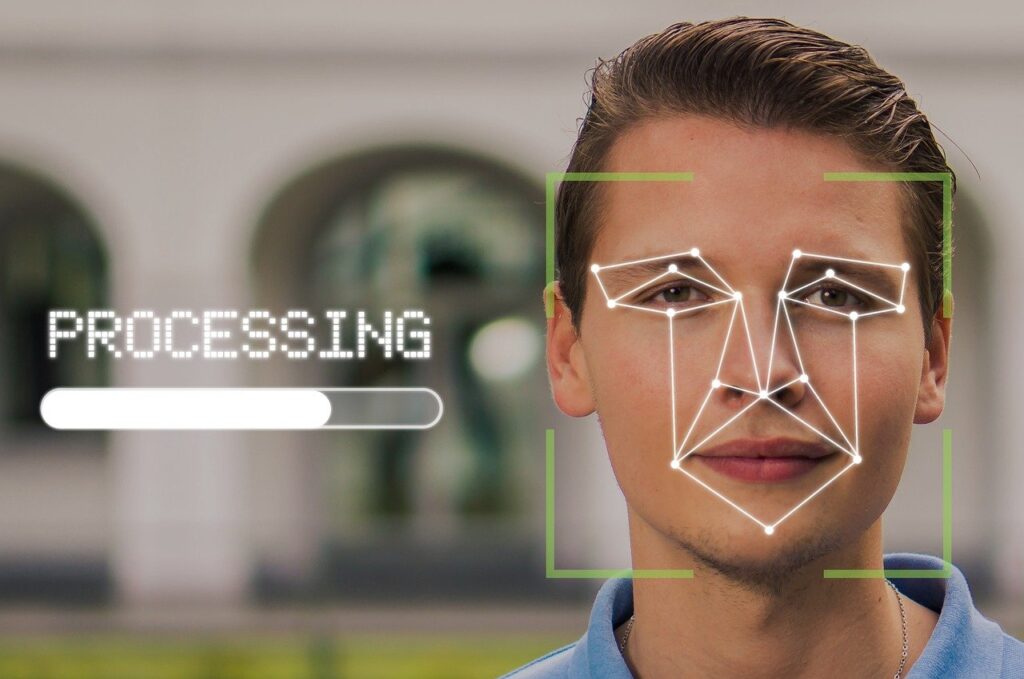
Next-Generation Biometrics: How border control is shifting from document verification to probabilistic risk assessment
By Lina Kolesnikova, Senior consultant of Rossnova Solutions (Belgium) & Michael Kolatchev, Principal of Rossnova Solutions (Belgium)
First-generation biometric systems were designed to answer a single question: does the person presenting themselves match a stored identity? These systems confirmed who someone was but offered little insight into what that identity meant operationally.
Second-generation systems introduced multimodal integration, combining identifiers such as face, fingerprints, and iris to improve reliability and reduce vulnerability. With false positives and false negatives in mind, when one modality performs poorly due to environmental or technical factors, another could compensate. Such multimodal integration increases resistance to spoofing and enables higher-confidence automation, allowing low-risk travelers to pass quickly while reserving manual checks for ambiguous cases.
This shift required more advanced architectures, including fusion models for biometric signals, interoperable registries, and cross-agency data exchange frameworks. Large-scale deployments such as the EU Entry/Exit System illustrate how biometrics evolved into continental infrastructures. Biometrics thus became more than a sensor function—it became an identity-management platform. Yet the central question remained identity-centric: does the person match the registered template?
The next (future) stage can be described as Biometrics 3.0—systems in which biometric identifiers operate within probabilistic risk architectures. Biometric verification becomes one component of a broader risk-evaluation framework. The guiding question shifts from “Is this you?” to “Should this case trigger attention?” Static traits are supplemented by dynamic signals such as movement patterns, behavioral analytics, and contextual data. Screening becomes continuous rather than ad-hoc, starting prior to arrival. Collection of elements of profiling may start even before a traveler reaches the airport. Airline registration data, advance passenger information, visa applications, historical records, and other administrative records already contribute to preliminary analytical profiles. At the same time, transport hubs increasingly function as sensor-rich environments where cameras, automated gates, and monitoring systems generate behavioral signals. Combined with AI-driven modelling, these datasets allow authorities to produce probabilistic assessments before the traveler formally enters the border-control post.
Elements of such model are already visible in contemporary border-management systems. In the USA, biometric entry–exit programs developed by DHS integrate facial recognition with travel history, watchlists, and other databases to evaluate travelers prior to and during border crossing. Singapore has implemented highly automated biometric processing at Changi Airport, where facial and iris recognition support a largely document-free passenger flow. In both cases, biometric identification functions as one signal within a broader analytical framework used to allocate security attention to cases where system believe the risk is thought to be higher (e.g., higher than certain threshold).
DNA: When the Body Becomes the Passport
Advances in rapid DNA technology have reduced processing times, with some platforms producing usable profiles within hours. Portable instruments and automated workflows are gradually moving genetic identification beyond centralized forensic laboratories, toward potential operational use near regulatory control points. Media reports indicate that U.S. Customs and Border Protection collected DNA from more than 2,000 U.S. citizens between 2020 and 2024.
Within border governance, DNA would likely function not as routine screening but as a high-assurance tool for exceptional cases. Possible uses include verifying biological relationships in asylum or family reunification procedures, resolving identity for undocumented individuals without reliable records, and authorized comparisons with criminal databases. In such cases, DNA acts as an escalation mechanism when conventional biometrics are insufficient or contested.
Operational viability depends heavily on legal and institutional frameworks. Genetic data requires strong security infrastructure, strict purpose limitation, controlled access, and clear retention rules. Unlike other biometric identifiers, DNA contains sensitive biological and familial information that demands heightened ethical and regulatory safeguards.
Although DNA collection is not part of routine border screening, dissolving technological barriers make its future operational role difficult to exclude entirely. The central question is therefore normative rather than technical: under what legal conditions rapid genetic identification might move from forensic investigation to limited operational use within border risk architectures? One could only hope that the protection by design is taken serious in that consideration, properly addressing both use and possible misuse.
Behavioral Biometrics: Identification Without Contact
Gait recognition represents one of the most mature forms of behavioral biometrics. Instead of relying solely on facial or body features or fingerprints, systems analyze movement patterns to identify individuals. Because gait can be captured at a distance and does not require full facial visibility, it remains functional even when faces are partially obscured or environmental conditions are poor.
Experimental systems also incorporate micro-expression detection and stress analytics. AI-assisted tools analyze subtle facial muscle activity, vocal modulation, and body posture to identify anomalies that may warrant further attention. These tools do not replace identity verification but add a behavioral layer that complements physical biometrics with dynamic signals.
Such capabilities are most effective within layered screening frameworks. AI-based crowd analytics can also detect abnormal movement patterns or deviations from typical passenger flows. The objective is not reliance on a single indicator but integration of multiple signals into structured decision-making process.
Integrated Ecosystems: The Architecture of the Predictive Border
This stage reflects the convergence of multiple data streams into a unified analytical environment
Much of this capability relies on machine-learning systems trained on large historical datasets. These systems operate through probabilistic estimation rather than deterministic reasoning. Their outputs depend heavily on the quality, representativeness, and labeling of training data. Incomplete or biased datasets can distort automated assessments. Governance of such systems therefore requires not only initial validation but also continuous monitoring, auditing, and recalibration.
Operational Realities and Systemic Risks
Every new layer of precision introduces new vulnerabilities.
False positives remain a central concern. In integrated architectures, errors rarely remain isolated: a single misclassification can trigger secondary screening, database flags, or heightened scrutiny across connected systems. When risk-scoring models are layered onto biometric matching, minor inaccuracies may cascade into disproportionate consequences.
Algorithmic bias presents another structural challenge. Systems trained on uneven datasets may perform inconsistently across demographic groups, particularly in facial and behavioral analytics. When such outputs feed automated triage or risk models, disparities may become embedded in operational decision-making.
Cybersecurity adds a critical dimension. Biometric repositories—especially those containing multimodal identifiers or genetic data are high-value targets. Unlike passwords, biometric traits cannot be reset once compromised. A successful breach could enable identity manipulation across multiple digital systems. The aggregation of identity, travel history, and behavioral data therefore creates both operational capability and strategic risk.This makes robust data protection, access controls, and secure processing and transmission essential, as well as demanding specific attention to prevention of misuse of both data and systems.
The growing digitization of identity also introduces what some analysts describe as the hackable body. Once biological and behavioral traits are translated into digital identifiers, they become part of the cybersecurity landscape. Misuse may occur through cyber intrusion, manipulation of datasets or training inputs, algorithmic interference, or repurposing of systems by institutional actors beyond their original mandate.
Security research also highlights technological escalation: as surveillance and identification systems become more sophisticated, criminal innovation often evolves in parallel. Improved detection capabilities can therefore stimulate new forms of technological circumvention.
False negatives also bring important risks.
Therefore, automation does not eliminate the need for human oversight. Border officers must understand system limitations, interpret outputs critically, and retain authority to override automated decisions.
These challenges highlight the importance of incorporating safeguards at the design stage rather than relying solely on downstream regulation. Approaches often described as protection-by-design seek to embed accountability mechanisms, transparency requirements, and technical constraints directly into system and operations architecture. Without such safeguards, biometric ecosystems may expand faster than the governance frameworks capable of supervising them.
The Geopolitics of Biometrics
At the strategic level, next-generation biometric systems are shaped not only by technology but also by regulatory models, deployment philosophies, and international standard-setting.
In Europe, biometric expansion operates within dense regulatory frameworks emphasizing data protection, proportionality, and interoperability across member states. In the USA, deployment has been driven more strongly by security imperatives and operational efficiency, often through agency-led initiatives integrated into homeland security architectures.
Across parts of Asia, large-scale implementations demonstrate rapid deployment and centralized integration. In some cases, national identity systems, border controls, and digital governance infrastructures are interconnected, enabling real-time data fusion at scale. China’s extensive deployment of integrated surveillance and identity infrastructures illustrates the potential scope of centralized biometric ecosystems.
As biometric infrastructures expand globally, actors shaping technical standards, certification processes, and data exchange protocols gain strategic influence. Biometric systems therefore function not only as tools of border management but also as instruments of technological standard-setting.
Conclusion
The contemporary border is no longer defined solely by geography. Once a physical line marking sovereign territory, it is increasingly a distributed digital architecture in which biological traits, behavioral signals, travel histories, and institutional databases converge.
In this environment, the border functions less as a checkpoint and more as a data-processing system. Identity verification, contextual analysis, and probabilistic modelling increasingly occur before arrival, at entry, and sometimes beyond it. The border is gradually shifting from a geographic boundary to an algorithmic process accompanying a person throughout wider area.
This transformation does not eliminate traditional border control; it reframes it within a technologically mediated governance model. Biometric identifiers and behavioral analytics are no longer endpoints of verification but inputs into broader architectures of mobility governance.
Debates about biometric infrastructures therefore cannot focus solely on protecting borders and digital systems. They must also address the protection of individuals and societies operating within increasingly data-intensive governance environments. As analytical capabilities expand, the boundary between security management and societal and personal oversight becomes blurred.
The central question is not whether biometric systems will expand – they almost certainly will – but how profoundly their integration will reshape the governance of personal movements in an increasingly data-driven world, and whether such new governance will be set timely to prevent the misuse, and to protect people and societies.