US CBP officers spook traveler; seize 412 pounds of khat in left behind and late baggage at BWI airport
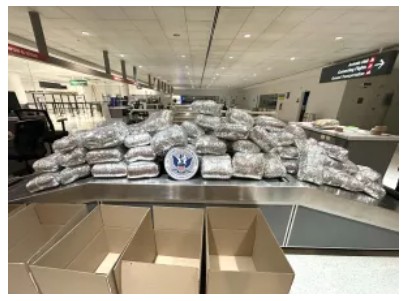
U.S. Customs and Border Protection officers foiled a significant khat smuggling attempt – nearly 331 pounds – at Baltimore Washington International Thurgood Marshall Airport on August 11.
CBP officers inspected five duffel bags left on the baggage carousel after the flight from London cleared and discovered a commercial quantity of what appeared to be tea leaves. Field tests identified the leaves as khat (Catha edulis).
An additional bag, and 81 more pounds of khat, arrived on Wednesday.
Khat, known as Abyssinian tea and African salad, is typically grown in East Africa and the Arabian Peninsula and is chewed for its amphetamine-like effect. Users also boil dried khat leaves to create a stimulant tea.
According to the DEA, khat contains two central nervous system stimulants — cathinone, which is classified as a Schedule I controlled substance, and cathine, a Schedule IV controlled substance. Symptoms of khat toxicity include delusions, loss of appetite, difficulty breathing, and increased blood pressure and heart rate. The World Health Organization classified khat as a drug of abuse in 1980.
CBP officers used baggage tags to identify the traveler but were unsuccessful in attempts to contact the traveler directly or through the airline. The traveler is confirmed to have cleared CBP inspection at BWI airport.
Travelers may leave baggage on the carousel for a variety of reasons, including having to rush to make a connecting flight, forgetting they need to retrieve their baggage, thinking that their baggage will be automatically loaded onto their connecting flight, or to distance themselves from illicit materials in the presence of CBP officers.
The six suitcases of khat weighed a combined 412 pounds, 4 ounces. The khat has a street value of about $50,000.
“It’s clear that a very vigilant Customs and Border Protection officer spooked this traveler and foiled an attempt to smuggle a substantial amount of a controlled substance into the United States,” said Adam Rottman, CBP’s Area Port Director in Baltimore. “Intercepting dangerous drugs along our nation’s borders remains one of our priority missions, and it is one way in which CBP can help keep our communities safe.”