Chilean Customs deploys scanner trucks in nationwide mega-operation to strengthen oversight
The operation took place in Arica, Iquique, Valparaíso and San Antonio, combining customs intelligence, risk analysis and non-invasive technology to strengthen the security of foreign trade control.
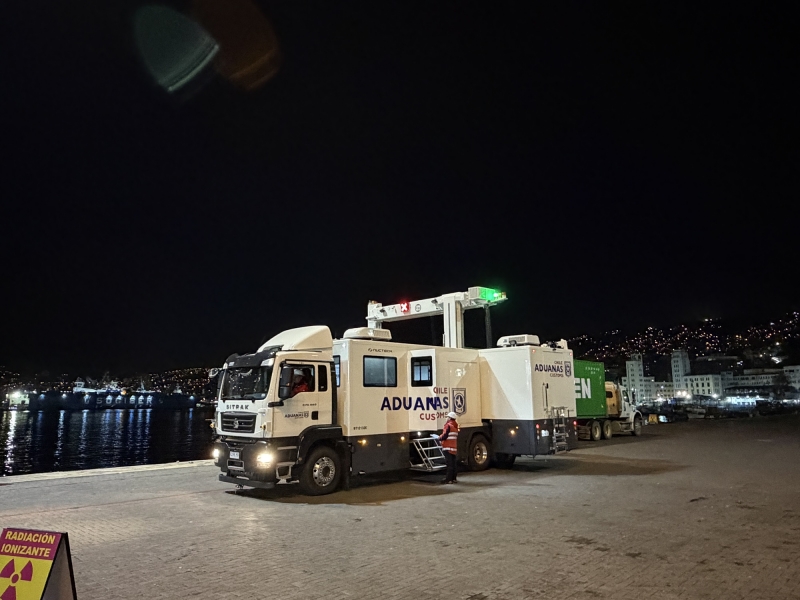
A massive interregional inspection operation, which included the coordinated deployment of six scanner trucks at strategic points throughout the country, was launched by the National Customs Service on Monday afternoon with the aim of strengthening controls on goods entering and leaving the country.
The intervention, which will last several weeks, includes strengthening inspections in Valparaíso, San Antonio, Iquique and Arica – in addition to the Los Libertadores border complex when weather conditions permit – through the use of non-invasive technology, customs intelligence and risk analysis to focus the reviews on pre-selected operations.
The coordinated deployment of six scanner trucks – three of them in the Tarapacá Region – represents an important institutional effort to strengthen the capacity for inspection, optimize the review of cargo and vehicles and move towards more modern, efficient and effective controls.
This strategy is coordinated by the Sub-Directorate of Auditing, together with the Customs Intelligence and Operations departments and the regional Customs offices involved, integrating technological capabilities and specialized teams to address the risks associated with foreign trade.
One of the main aspects of this intervention is the use of advance information on cargo and intelligence tools that allow the identification of higher risk operations and determine those that require additional controls through scanners or physical inspections.
In Valparaíso and San Antonio, controls are focused especially on dangerous cargo classified as IMO; in Iquique on port cargo; and in the Arica port area on goods from Bolivia, safeguarding the legal framework applicable to this type of foreign trade.
The Regional Presidential Delegate for Valparaíso, Manuel Millones, emphasized the contribution of these actions to the country’s security. “Customs has implemented a major operation at the ports with the objective of deploying scanner trucks to further enhance the oversight role of our officers regarding smuggling, drugs, hazardous materials, weapons, and other illicit goods… And to confront these types of crimes that are committed daily, but now the fight is head-on. It is President José Antonio Kast’s decision to combat crime in all its forms, and for that, we will spare no resources to strengthen Customs’ work in confronting these types of crimes.”
The Acting Deputy Director of Customs Auditing, Cristian Merino, highlighted the importance of strengthening this control model so that “the different risk areas select different types of merchandise, which aims to enable us to manage risk intelligently through the use of this tool 24 hours a day, 365 days a year… This is being strengthened through coordinated work at the national level, which allows us to feed an institutional risk matrix for the protection of citizens within the framework of the fight against organized crime.”
The Regional Secretary of Security for Valparaíso, Hernán Silva, also participated in the launch of the operations “to achieve the control objectives established by Customs, and to intervene in all types of attempts to transfer prohibited cargo such as drug trafficking or contraband. This is yet another example of how the commitments made are being fulfilled, in the sense of providing greater security to the public by attacking organized crime, which is established through both drug trafficking and smuggling.”
This mega-operation marks the beginning of an intervention that will extend over the next few weeks, a period in which the audits, findings and results will be monitored, with the purpose of strengthening the effectiveness of the controls.
With this initiative, the National Customs Service reaffirms its commitment to modernizing its oversight capabilities through the use of intelligence, technology, and specialized staff, contributing to combating smuggling, protecting legitimate trade, and strengthening national security.
Across the four participating customs offices, 189 trucks and their containers or cargo were scanned, many of which corresponded to vehicles transporting dangerous goods (IMO) in addition to regular merchandise.