
Digitus Supra Civitatem: Smart Borders and the Global Sovereignty Dilemma
Across the globe, governments are investing in “smart borders” to address the rise of terrorism, illicit trafficking, irregular migration, and digital-age vulnerabilities. These technologies—ranging from biometrics and AI-driven analytics to integrated surveillance networks—offer the promise of enhanced control and real-time responsiveness. But their adoption also raises strategic questions about sovereignty, digital dependency, and civil liberties.
Nowhere are these tensions more visible than in West Africa, where transnational security threats and fragile governance structures intersect with ambitious modernization programs. Countries in the region are turning to advanced border management systems—often backed by foreign donors and private vendors—as a way to assert control and enable regional integration. Yet, in doing so, they risk importing vulnerabilities that could ultimately undermine their autonomy.
This article explores the global implications of smart border systems by focusing on developments in West Africa as a regional case study. It is structured in three parts: the first outlines how smart borders are emerging in the region; the second probes the strategic risks they introduce; and the third offers a policy path forward for states aiming to innovate without surrendering control.
Smart Borders: Global Model, African Testbed
Biometric terminal in use at an African airport, representing the integration of advanced technologies in border control.
The concept of “smart borders” emerged in the early 2000s, shaped by global security realignments following the 9/11 attacks. It was institutionalized notably through the European Union’s Smart Borders Package (2013) and the U.S. Department of Homeland Security’s bilateral agreements with Canada and Mexico. These frameworks laid the foundation for border management strategies built on automation, surveillance, biometric identification, and integrated data platforms.
While rooted in the Global North, the smart borders model has progressively influenced African border governance. At the continental level, the African Union has embraced the digital transformation of border management as part of its Digital Transformation Strategy for Africa (2020–2030). This initiative encourages the adoption of biometric systems, interconnected databases, and smart corridors to support trade facilitation and mobility governance within the framework of the African Continental Free Trade Area (AfCFTA).
At the regional level, institutions like ECOWAS have advanced the operationalization of smart border components through the ECOWAS Biometric ID Card (E-BID) and the WAPIS police information-sharing platform, developed in partnership with INTERPOL. These tools aim to reconcile free movement protocols with stronger regional security coordination.
In West Africa, the uptake of smart border technologies is driven by the urgent need to address persistent transnational threats. Governments increasingly view digital infrastructure as a strategic solution to enhance national security and operational control.
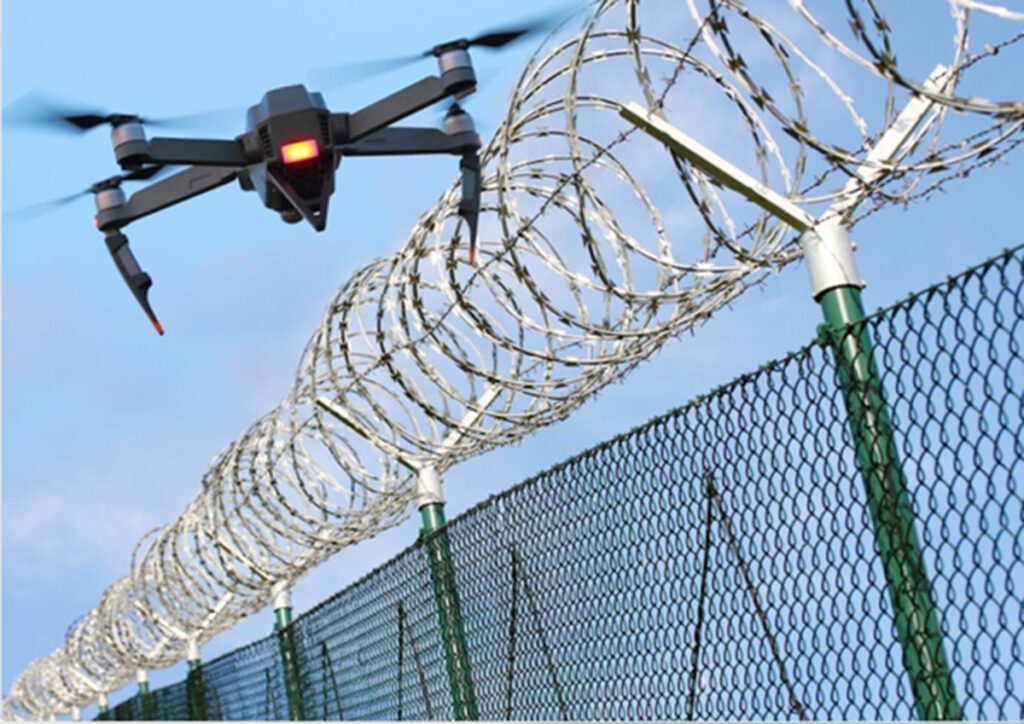
Senegal has adopted a “single window” platform for customs operations and invested in drone-based surveillance and non-intrusive scanning systems at key entry points.
Côte d’Ivoire, though primarily focused on urban security, has extended surveillance technologies such as facial recognition and high-definition video systems—installed with assistance from Huawei—into areas relevant to cross-border control.
Nigeria has launched multiple modernization programs involving electronic surveillance and biometric systems, often in collaboration with INTERPOL and the IOM.
Mauritania, while not yet a full adopter of smart border frameworks, is upgrading border posts such as Gogui through EU and IOM partnerships, laying the groundwork for future integration.
While these developments illustrate progress, they also introduce new concerns: data privacy, foreign dependency, and digital insecurity. The suspected cyberattack on Europe’s power grid underscores how digital infrastructures, once interconnected, become potential targets. This dilemma—between innovation and sovereignty—frames the next section.
Sovereignty for Sale? Global Risks, Local Vulnerabilities
While smart borders promise enhanced control and operational efficiency, they also present new forms of vulnerability. As countries deepen their reliance on foreign technologies and external funding, they risk compromising long-term sovereignty and resilience.
A core challenge lies in technological dependence. Systems deployed across West Africa—from biometrics to data storage—are often designed, hosted, or maintained by foreign providers. In Côte d’Ivoire, facial recognition infrastructure installed via Huawei raises questions over data ownership and system integrity. Similar dependencies are observed in Nigeria, Senegal, and Mauritania, where donor-funded projects are operational but externally maintained.
As reliance grows, so does the exposure to cybersecurity threats. The recent cyberattack on Morocco’s National Social Security Fund (CNSS), involving a major data leak on Telegram, illustrates the risks faced even by robust national agencies. When coupled with the suspected disruption of Europe’s power grid, it becomes clear that digital border infrastructures may be targeted in future geopolitical escalations.
Compounding this is the absence of modern legal protections. Many states lack updated legislation on data protection, surveillance oversight, or biometric governance. Without legal safeguards, border technologies can be repurposed for political control, undermining public trust.
Fragmentation also hinders progress. Despite ECOWAS efforts, national systems remain siloed, limiting regional coordination and interoperability. In this fragmented environment, smart borders may function more as isolated experiments than integrated security solutions.
Retake the Controls: Principles for Sovereign Digital Border Governance
Navigating the tension between innovation and sovereignty requires strategic reorientation. The goal is not to reject technology but to govern it deliberately.
A foundational step is to build national cybersecurity and data governance strategies. Legal clarity on data ownership, auditability of foreign tech partnerships, and national control over biometric data are essential.
Parallel to this, investing in local expertise is crucial. Reducing dependency on foreign vendors requires training engineers, data analysts, and customs officials. Leveraging open-source tools can improve flexibility and reduce long-term costs.
However, national efforts alone are not sufficient. Regional harmonization through ECOWAS and the African Union is necessary to align legal frameworks, enable system interoperability, and strengthen collective bargaining power.
Just as important, smart borders must be developed within a rights-respecting framework. Technologies should not be tools for repression. Independent oversight bodies, civil society engagement, and legal accountability must accompany digital deployments.
Finally, resilience must include anticipation of unconventional threats. Cyber incidents like the CNSS breach in Morocco reveal how critical infrastructure can become a vector for destabilization. Scenario planning, incident response capacity, and regional intelligence sharing should be part of every smart border strategy.
In conclusion the promise of smart borders lies not merely in their technological sophistication, but in their potential to recalibrate the delicate relationship between state authority, regional solidarity, and the movement of people in an increasingly uncertain world. These systems—if thoughtfully conceived and sovereignly managed—can serve as powerful instruments for peace, economic integration, and the protection of national and human security alike.
Yet, the allure of innovation must not obscure the deeper stakes at play. A border is never just a line—it is a mirror of the state’s values, its capacity for governance, and its contract with society. In delegating core functions to foreign-built platforms or opaque digital architectures, governments risk trading one form of vulnerability for another—less visible, more insidious, and perhaps more difficult to reclaim.
To embrace technology without losing sovereignty, to protect borders without compromising freedoms, to integrate data systems without dismantling democratic oversight: these are not simply technical questions—they are profoundly political choices. They require vision, courage, and above all, the humility to ask not only how we secure our borders, but for whom, and to what end.
In the final analysis, the challenge before any region embracing smart borders is not whether it will be more secure, but whether it will be more sovereign in the process.
And so we must ask, in the digital age : Can a nation truly control its borders if it no longer controls the code that governs them?
By Adnane KAAB, International Strategy Analyst (IRIS, Paris) and former senior officer in the Royal Moroccan Air Forces