Extended Land Border Surveillance In Ghana
Technology, Intelligence and Territorial Security in Modern Border Management
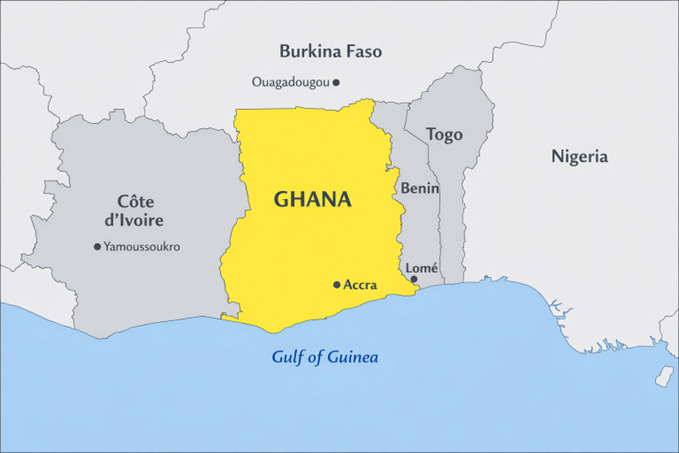
Ghana’s territorial borders remain a critical component of national security, regional stability, economic development, and migration governance within West Africa. Positioned strategically within the ECOWAS sub-region, Ghana shares land borders with Côte d’Ivoire, Burkina Faso, and Togo, while maintaining extensive maritime boundaries along the Gulf of Guinea. The increasing complexity of transnational crimes, irregular migration, terrorism, trafficking networks, smuggling, and cross-border criminal activities has made modern border security a top national priority.
The Ghana Immigration Service (GIS), under the Ministry of the Interior, continues to play a central role in protecting the territorial integrity of Ghana while facilitating legitimate movement of persons, trade, and regional integration in line with ECOWAS protocols. Over the years, the Service has progressively transformed its border management architecture through the integration of modern technology, intelligence-led operations, infrastructure expansion, inter-agency collaboration, and personnel capacity building initiatives.
One of the most significant achievements in Ghana’s border security architecture is the deployment and operationalisation of two advanced border management systems: PISCES and MIDAS.
PISCES, which stands for Personal Identification Secure Comparison and Evaluation System, is a sophisticated border security and traveller screening platform that enables real-time identity verification, biometric enrolment, and watch-list screening at various border entry and exit points. The system enhances the ability of immigration officers to identify suspicious travellers, detect fraudulent travel documents, monitor migration flows, and strengthen national security surveillance.
Complementing PISCES is MIDAS – the Migration Information and Data Analysis System- developed by the International Organization for Migration (IOM). MIDAS serves as an integrated migration data collection and border management platform that captures traveller information, stores biometric data, analyses migration patterns, and supports intelligence-driven border operations.
A major strength of Ghana’s border security strategy is the interoperability and interconnectivity between PISCES and MIDAS. The two systems work in a complementary manner, allowing seamless exchange of traveller information, biometric verification, watch-list alerts, and migration intelligence across multiple border points. This integration significantly improves operational efficiency, data accuracy, and coordinated border surveillance.
Beyond official entry points, Ghana has also prioritised surveillance across extended and difficult terrain borders. Several remote and hard-to-reach border communities, particularly along unapproved routes, are now supported with mobile tablets deployed to immigration officers on field patrols. These mobile devices enable officers to capture traveller details, and travel document information in real time, even in locations without permanent border infrastructure.
This initiative has become particularly effective in addressing irregular migration and undocumented movement through porous border routes. It ensures that migration control measures are extended beyond traditional checkpoints to cover isolated and vulnerable crossing points frequently exploited by smugglers, traffickers, and criminal networks.
Despite these improvements, Ghana continues to face significant border security challenges. The country’s extensive and porous borders, especially within remote frontier areas, create vulnerabilities that criminal groups attempt to exploit. Unapproved routes across the northern frontier remain a concern due to the movement of smugglers, arms traffickers, human trafficking syndicates, and extremist elements operating within the wider Sahel region.
The growing instability and terrorism threats in parts of the Sahel have further increased the importance of enhanced surveillance along Ghana’s northern borders. In response, the Government of Ghana and the Ghana Immigration Service have intensified efforts to strengthen preventive border security measures and intelligence gathering mechanisms.
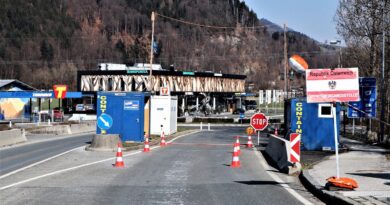
One major intervention currently being implemented is the deployment of ballistic security cabins at strategic northern border locations. These reinforced ballistic cabins are designed to protect frontline officers while enhancing operational readiness against terrorism-related threats and other cross-border criminal activities. The cabins provide secured observation and response positions for immigration personnel operating in high-risk areas and demonstrate Ghana’s proactive approach toward counter-terrorism preparedness.
In addition to physical infrastructure, the Ghana Immigration Service is investing heavily in technology-driven surveillance systems. Officers of the Service are currently undergoing specialised drone piloting and aerial surveillance training to improve border monitoring capabilities. The use of unmanned aerial systems (UAS) or drones is expected to significantly enhance real-time surveillance of difficult terrains, unapproved routes, forests, and isolated border corridors.
Drone surveillance provides multiple operational advantages, including rapid situational awareness, live video monitoring, improved intelligence gathering, and faster response to suspicious border activities. This initiative reflects Ghana’s commitment to adopting modern border security technologies consistent with international best practices.
The Ghana Immigration Service also continues to strengthen collaboration with sister security agencies including the Ghana Armed Forces, Ghana Police Service, Customs Division of the Ghana Revenue Authority, National Intelligence Bureau, and regional security structures under ECOWAS. Joint border patrols, intelligence sharing, and coordinated operations have improved surveillance effectiveness and reduced vulnerabilities along critical border corridors.
At the regional level, Ghana remains committed to ECOWAS protocols on free movement while balancing the need for robust security screening and migration control. Ghana’s border management strategy therefore seeks to combine facilitation with security through intelligence-led and technology-driven solutions.
The Service has also continued to invest in human capital development through specialised training programmes in border intelligence, document fraud detection, biometric systems operations, counter-terrorism awareness, cybersecurity, and migration governance.
Community engagement remains an important component of Ghana’s extended border surveillance strategy. Immigration officers regularly engage border communities to build trust, gather intelligence, and promote public awareness on border security threats.
Ghana’s border security approach reflects a broader understanding that modern border governance is not solely about restricting movement but about managing mobility safely, efficiently, and responsibly. The integration of advanced technology, aerial surveillance, mobile biometric systems, ballistic protection infrastructure, and intelligence-led operations demonstrates the country’s determination to remain ahead of emerging security threats.
Through strategic investments, innovation, inter-agency cooperation, and operational resilience, Ghana is steadily building a stronger and smarter border management system capable of responding effectively to both present and future security challenges.
By Henry Boakye – Superintendent of Immigration, Ghana Immigration Service