
Historic seizure of more than a thousand tons of cargo contaminated with drugs in national ports
Interagency work made it possible to detect the cargo in the Ports of Arica, Valparaíso and San Antonio, with the support of detection dogs and technologies.
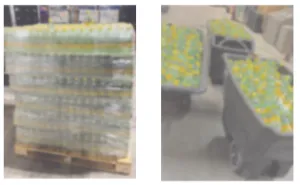
In the Port of Arica, this Monday, June 8, National Prosecutor Ángel Valencia and Minister of Public Security Martín Arrau highlighted the investigative result of the Arica Prosecutor’s Office, together with the Maritime Police dependent on the Chilean Navy and the National Customs Service, which recorded the historic seizure of 1,080.8 tons of wood impregnated with different drugs in the ports of Arica, San Antonio and Valparaíso.
This constitutes the largest seizure in Chilean history, considering that, of each shipment of wood detected, between 10 and 20% corresponds to illicit substances, which amounts to 100 tons of drugs, mainly cocaine hydrochloride and ketamine.
Security Minister Martín Arrau stated that the historic seizure demonstrates the magnitude and sophistication of the organized crime facing our country, a transnational threat that operates with resources, adaptability, and without respecting borders. In response, the necessary action is a coordinated state, with its institutions acting jointly and decisively to protect our borders, strengthen public safety, and prevent these organizations from disrupting the peace of families and communities throughout Chile.
For his part, the National Prosecutor indicated that this result is the fruit of coordinated work by various institutions, carried out within the framework of the port focus created in 2024 to strengthen the protection of our ports and anticipate the actions of organized crime through intelligence and criminal analysis. The magnitude of this seizure demonstrates that it is not a chance discovery or a stroke of luck, but rather the result of a planned investigation, based on information, analysis, and a sustained strategy to safeguard the country’s economy and the security of its citizens.
The detections were achieved based on analysis and profiling of the loads, in addition to the action of the canine teams of both institutions and the use of special technologies, with each case being confirmed by the analyses of the Public Health Institute (ISP).
This result comes as part of an investigation led by the Intelligence and Organized Crime Unit of the Arica and Parinacota Regional Prosecutor’s Office, focused on organized crime offenses linked to the ports of Arica and Iquique. It also represents the most significant operation carried out by the Department of Maritime Police Intelligence and Investigations (DIPOLMAR), together with the Drug Enforcement and Related Crimes Unit of the Arica Customs Office, in coordination with the Navy and Customs Offices of Valparaíso and San Antonio. After a six-month investigation, they detected 45 containers of wood impregnated with cocaine, ketamine, and other substances associated with drug processing, such as caffeine and lidocaine, used as cutting and diluting agents, as well as ecgonine methyl ester and xylazine.
These detections constitute one of the most relevant investigative procedures developed in Chile regarding transnational organized crime via maritime routes, demonstrating the use of timber shipments from Bolivia as a method of concealment for sending illicit substances to various international markets, mainly Germany, Belgium, France, Czech Republic, Morocco, United States, Spain, Portugal, Italy, Mexico, New Zealand, Panama, Mauritius, United Kingdom and Dominican Republic.
The Regional Prosecutor of Arica and Parinacota, Mario Carrera, provided details of the case. “Following significant results in the detection and seizure of nearly a thousand tons of chemical precursors, a key question arose: where was the drug associated with these precursors being produced, and how was it leaving the country? Through exhaustive investigative work, this concealment and export mechanism was established, allowing the identification of a large-scale logistics network linked to international drug trafficking.”
The seized drugs conservatively amount to 108 tons, including cocaine hydrochloride and ketamine, making this the largest drug seizure ever recorded in Chile.”
During the investigation period, a sophisticated criminal method was established consisting of the chemical impregnation of illicit substances in forest products destined for export, a method that aims to hinder detection through conventional controls, using advanced chemical processes that subsequently require specialized laboratories for the extraction and recovery of the drug, also taking advantage of logistical structures linked to international trade to hinder the action of the control agencies.
The National Director of Customs, Alejandra Arriaza, praised the work of the Arica Customs office in detecting the method the organization used to conceal the drugs. “It is worth highlighting the ongoing training of our staff, as well as the work carried out by our canine units throughout the country. This was a significant discovery made possible by the resources and tools that Customs and other institutions provide to achieve such important results.”
According to the background information gathered during the investigation, criminal organizations would use Chile as a logistics platform to project contaminated shipments to strategic ports in Europe, North America, Oceania and Africa, taking advantage of the high flow of international maritime trade and the complex logistics chains associated with foreign trade.
The illicit substances contained in the detected shipments would have allowed the production of millions of doses destined for the international market, which, according to preliminary estimates based on average values of illicit marketing in Europe, could have generated criminal profits exceeding US$8.334 billion in European markets, considering the processes of extraction, refining and distribution.
The Director General of Maritime Territory and Merchant Marine, Vice Admiral Arturo Oxley, stated that “this seizure of approximately 108 tons of drugs, primarily cocaine and ketamine, is equivalent to 8.3 billion dollars. To give you a point of comparison, that’s equivalent to 100 years of our budget. The contribution of the maritime authority at the maritime border and at sea, in providing safe ports and ensuring that our country maintains the institutional framework that supports the security we have in our ports, is vital.”
It is estimated that the drugs removed from circulation through this procedure would have prevented the potential distribution of more than 584 million illicit doses in various international markets, significantly impacting the operational and financial capabilities of the criminal organizations involved.
The investigative analysis also made it possible to identify logistical and commercial patterns associated with this method of concealment, including maritime routes, linked companies, export profiles and specific characteristics of the contaminated cargo, background information that is currently being analyzed in coordination with national and international agencies specializing in combating drug trafficking and organized crime.